As a tech reporter, I was naturally interested when Apple announced Spatial Audio with Dolby Atmos for Apple Music in 2021. Dolby Atmos was already familiar to me from movie theaters, but I had never really considered what it could bring to the music I’d been listening to for most of my life. Head tracking was another unfamiliar concept, and I wasn’t quite sure how it all worked together.
2021: Discovering Spatial Audio
That changed on the very first day Spatial Audio became available on Apple Music, when I revisited Linkin Park’s Hybrid Theory, an album I had listened to countless times since my teenage years, across cassettes, CDs, vinyl records, and whatever digital formats happened to be available.
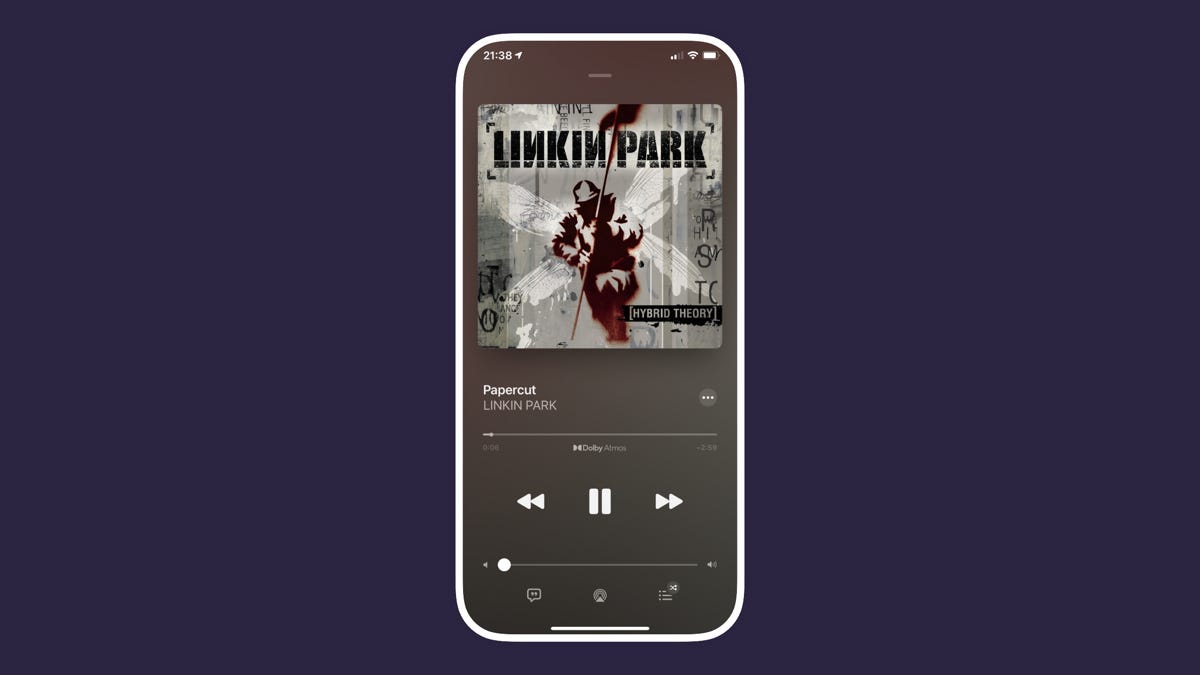
Hearing it in multichannel audio was something of a revelation, as instruments and details that I thought I knew by heart suddenly seemed to occupy their own space, revealing layers of the recording that had somehow escaped my attention for years. At that very moment, I began to understand what immersive audio could bring to music.
I’ve always enjoyed watching restored films, particularly when the restoration reveals details I had never noticed before, even after seeing the film countless times. Dolby Atmos offered me a similar experience with music, while also opening up entirely new ways of presenting a recording.
Naturally, I began looking for more, from Marvin Gaye to The Beatles and The Rolling Stones. Whenever a familiar album appeared in Apple Music’s Spatial Audio section, I would eagerly give it a listen, curious to hear what I might discover this time.
2022–2024: From Listening to Collecting
What eventually turned this hobby into something more serious was Taiwan-based Rock Records, one of the most influential record labels in the history of Mandopop.
Rock Records began releasing Dolby Atmos remixes of its classic albums in 2022, with a new release arriving almost every Friday. Having grown up listening to its music, I found these releases particularly meaningful, not least because the remixes were often exceptionally well produced, allowing me to rediscover songs that had accompanied different periods of my life.
Before long, Fridays became something I genuinely looked forward to. There was a particular joy in discovering which familiar album had been given a new life in Dolby Atmos, and listening to songs I had known for years as if I were hearing them for the first time.
Perhaps it was a habit from my professional career, but I found myself documenting what I listened to. In 2023, I started keeping a simple Notion database of Dolby Atmos albums, mostly Chinese-language releases, by copying and pasting their Apple Music links.
There was just one problem: finding these releases was somehow difficult.
Apple Music did have editorial playlists and a dedicated Spatial Audio section, but neither offered a comprehensive overview of what was actually available. At the time, the Spatial Audio section in mainland China’s Apple Music didn’t even have a category for Chinese-language music. There was no easy way to search specifically for Dolby Atmos releases by artist or album, and the format labels could sometimes be misleading, especially when only certain tracks on an album were available in Dolby Atmos. More frustratingly, there was no easy way to know when an existing album had received a Dolby Atmos mix unless I happened to check it myself.
I remember one Friday in 2024 when I couldn’t find the latest Rock Records release in Apple Music’s usual promotional section. For nearly two years, checking for a new Dolby Atmos remix had become part of my Friday routine, and suddenly, there was nothing. I was genuinely anxious, wondering whether Rock Records had quietly stopped releasing these remixes without any announcement.
Eventually, I discovered that the music was still there; it simply hadn’t been featured that week, presumably because other releases had taken priority. The experience reinforced something I’d already begun to realize: I couldn’t rely on Apple Music’s editorial selections to keep track of what was actually available.
The first person I shared my idea with was Nicolas Zhang, a Technical Director at Dolby Laboratories. I showed him my Notion page, and he liked it. He then encouraged me to turn my personal collection into a more comprehensive database of Chinese-language Dolby Atmos releases.
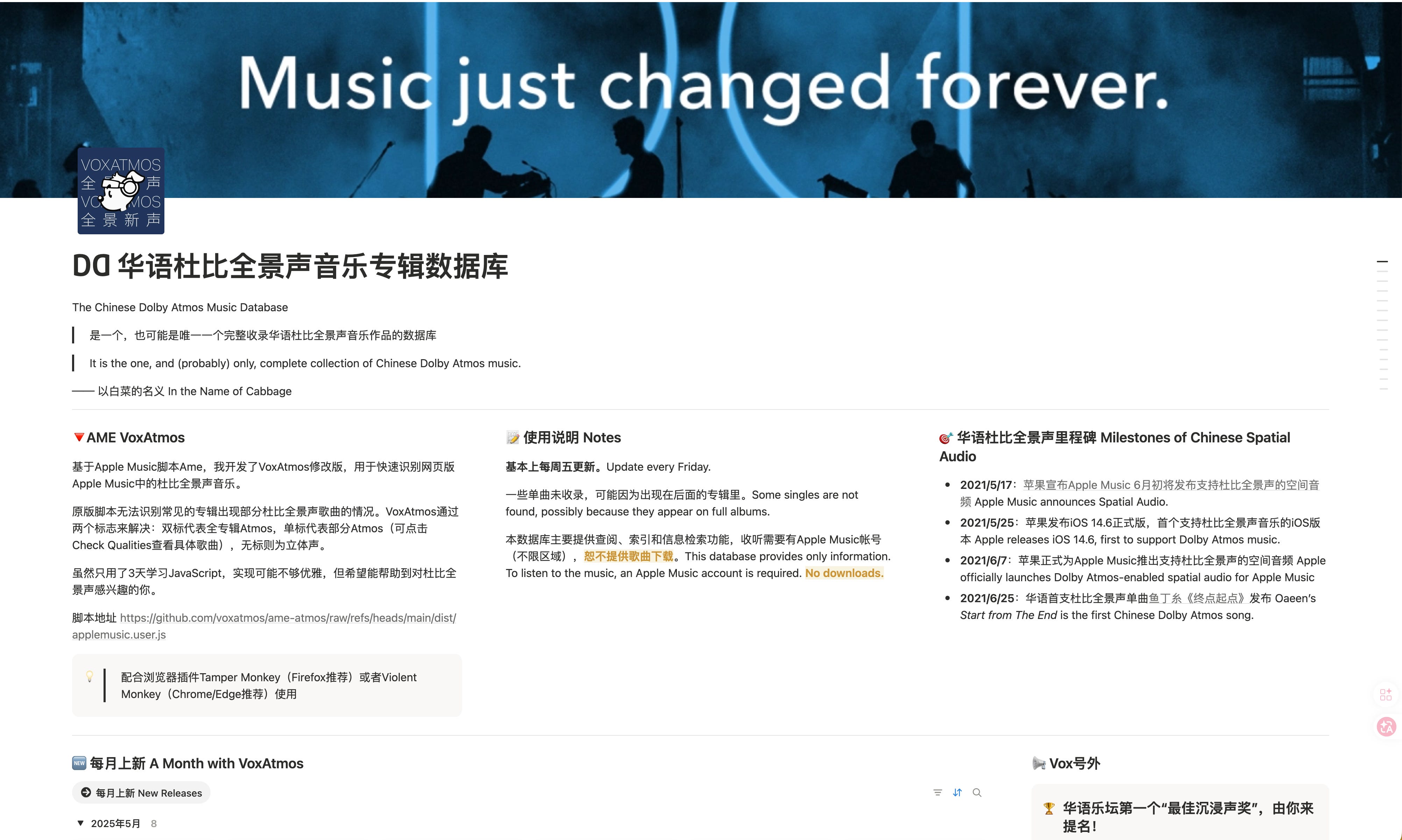
And with the help from Nicolas, the collection gradually reached mixing engineers and musicians, some of whom began contributing information about their own work.
Their interest was encouraging, but as the collection grew, the limitations of Notion became increasingly obvious: searching was barely usable, the mobile experience was poor, and sharing the database with others was cumbersome.
More importantly, I was still manually checking Apple Music for new releases and entering information, a routine that eventually consumed at least 15 hours a week. I had essentially created a second job for myself, except that this one didn’t pay anything.
By early 2025, I had a fairly clear idea of what I wanted to build instead. I imagined something inspired by Discogs, Wikipedia, and Criterion Collection: a dedicated platform for immersive music, bringing together recordings, the people behind them, and information that was often difficult to find on mainstream streaming services. I also wanted room for editorial recommendations and technical observations, drawing on my experience as a journalist and my growing interest in immersive audio production.
The obvious solution was to hire someone who knew how to build websites.
2025–2026: From Notion to the App Store
In April 2025, I traveled to Beijing to discuss the idea with potential developers. One of them offered some friendly advice: the project might not have particularly promising commercial prospects, and perhaps I should reconsider before investing too much time and money in it.
I returned home to Xi’an without a website, but I couldn’t quite let go of the idea. So I talked it through with ChatGPT on May 6, which assured me that, yes, I could build it myself.
With absolutely no programming experience, I decided to give it a try. The first attempts were a mess, and there were plenty of moments when I had no idea what I was doing, but somehow I couldn’t bring myself to give up. After roughly a month and maxing out 31 ChatGPT conversations, VoxAtmos was released as a WeChat Mini Program on June 2, 2025.
With no advertising budget and little more than a promotional video I’d made myself, the Mini Program attracted roughly 3,000 users in its first month, far more than I had expected. Encouraged by the response, I kept building, adding a content management system, allowing audio engineers to contribute information about their work, and, most importantly, automating the collection of music data.
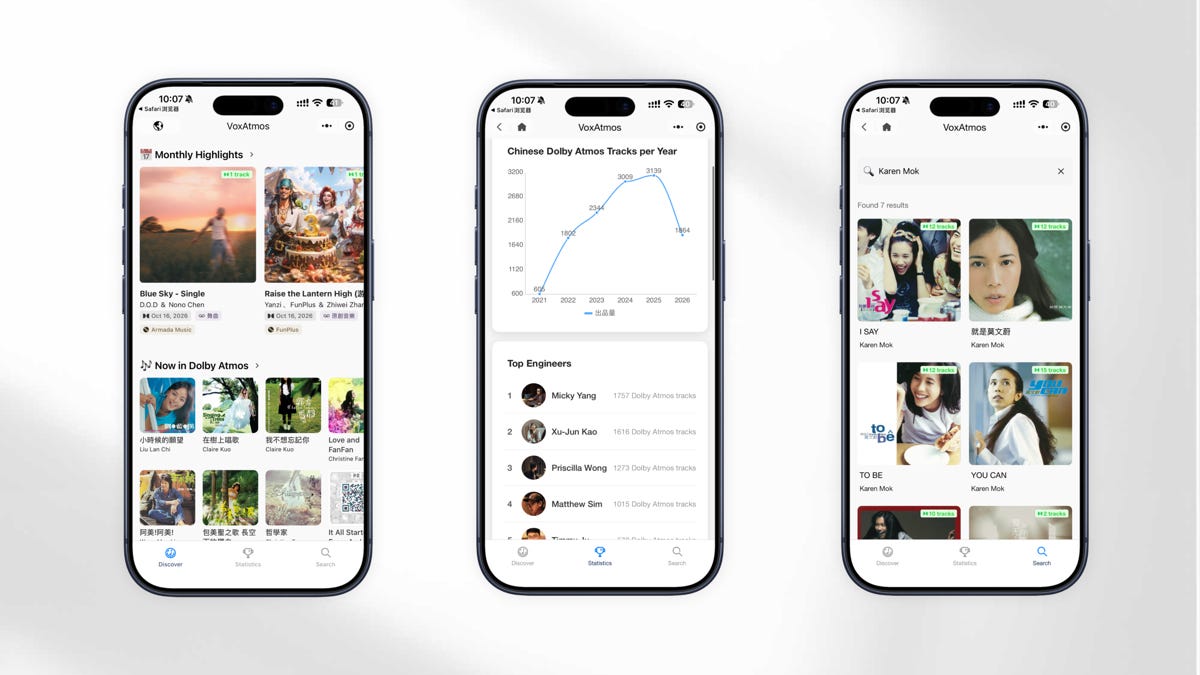
By September 2025, after dozens of iterations, I was invited to present some of VoxAtmos’s findings at Dolby Atmos Day in Beijing. Just a few months earlier, I had been looking for someone to build a website for me. Now I was standing in front of people who actually made the music I loved, sharing insights drawn from a database I’d built myself.

But the WeChat Mini Program had one major limitation: it could help people discover Dolby Atmos music, but not easily listen to it. WeChat’s restrictions on individual developers made playback integration impossible, and I wanted to close that gap between discovery and listening. That meant building a native app.
I began developing the iOS version in December 2025. By then, I had spent months building and maintaining the WeChat Mini Program, so I felt reasonably confident about taking on native app development. As it turned out, it was much harder than I expected.
One particularly stubborn bug caused the app to crash whenever I navigated backward. I spent nine days trying to fix it, experimenting with practically every AI coding tool I could find, but nothing worked. I’d become genuinely nervous about pressing the back button.
Eventually, I took a two-day break. An idea came to me while I was away, and when I returned, I discussed it with AI, tried a different approach, and finally fixed the bug.
I was absolutely thrilled. It might sound ridiculous to experienced developers, but solving it myself gave me a sense of satisfaction unlike anything I’d experienced in my previous career. (And yes, the back button works perfectly fine now.)
There were more rewarding moments, too. The first time I connected VoxAtmos to Apple Music and successfully played a Dolby Atmos track inside my own app felt like a breakthrough. After years of collecting and documenting immersive music, I could finally listen to it through something I’d built myself.
VoxAtmos finally launched on the App Store on February 2, 2026, marking another milestone for the project.
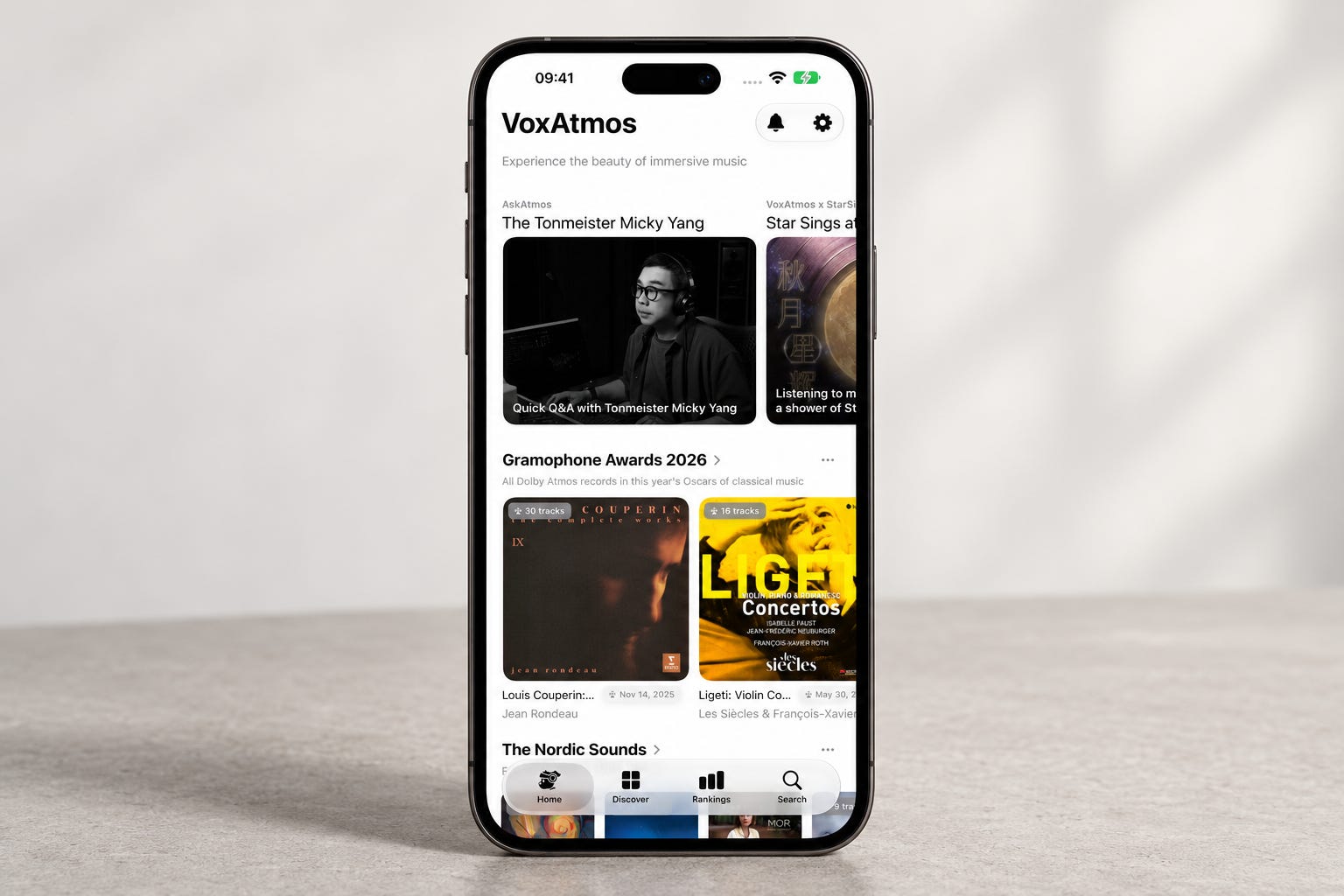
Today: Why VoxAtmos Matters
What began as a simple Notion table of manually copied Apple Music links has grown into a global database covering nearly 110,000 Dolby Atmos releases and almost half a million tracks.
VoxAtmos now continuously scans Apple Music catalogs for new releases and changes in availability, while collecting information about artists, mixing engineers, recording studios, and record labels.
But VoxAtmos isn’t just about building a bigger catalog. I want to make immersive music easier to discover, beyond whatever happens to be featured on Apple Music’s Spatial Audio section. Listeners can explore a record label’s Dolby Atmos releases, find other albums mixed by an engineer they admire, and follow their favorite artists and engineers to stay informed about new releases. The idea is to connect recordings with the people behind them, making it easier to find something interesting along the way.
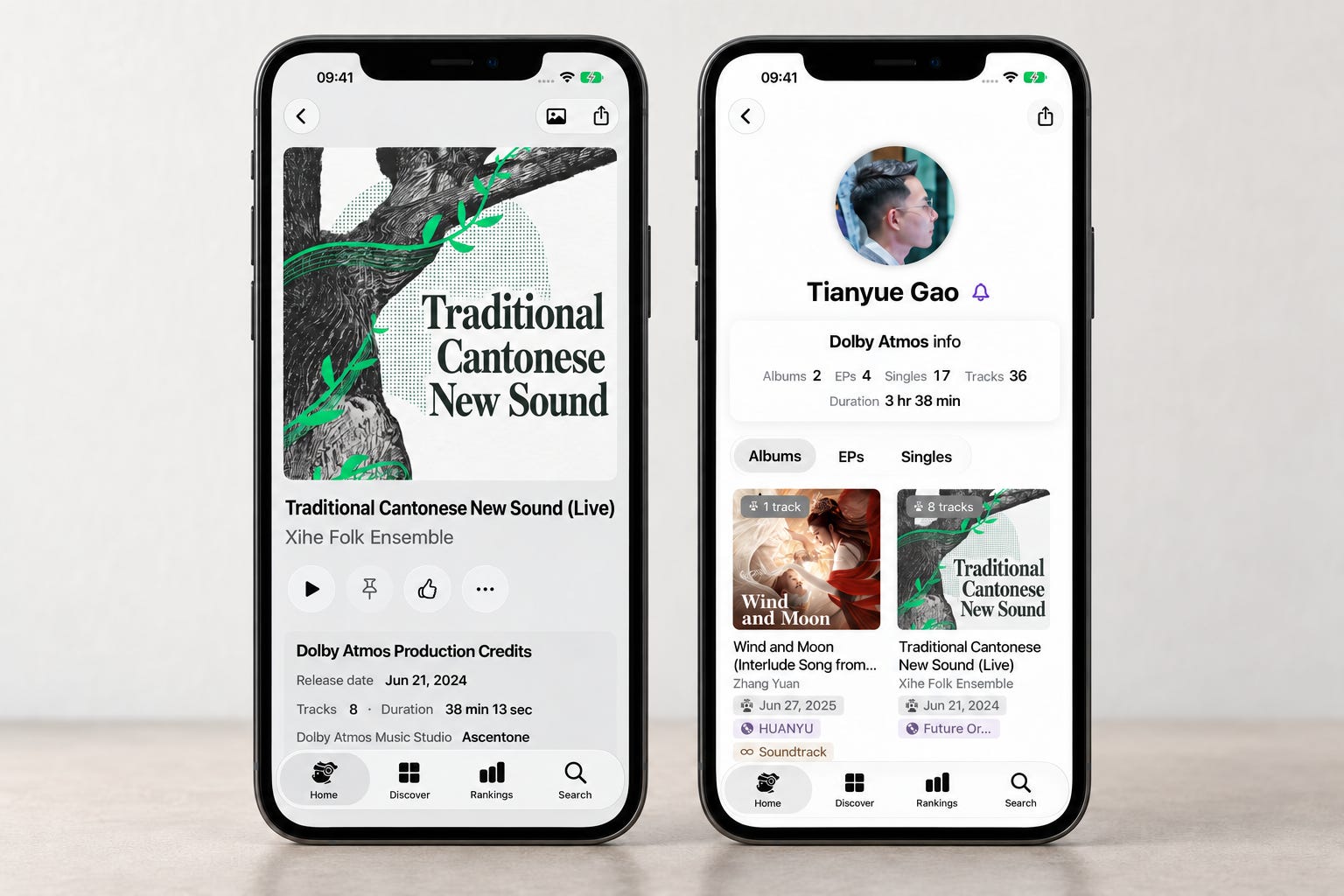
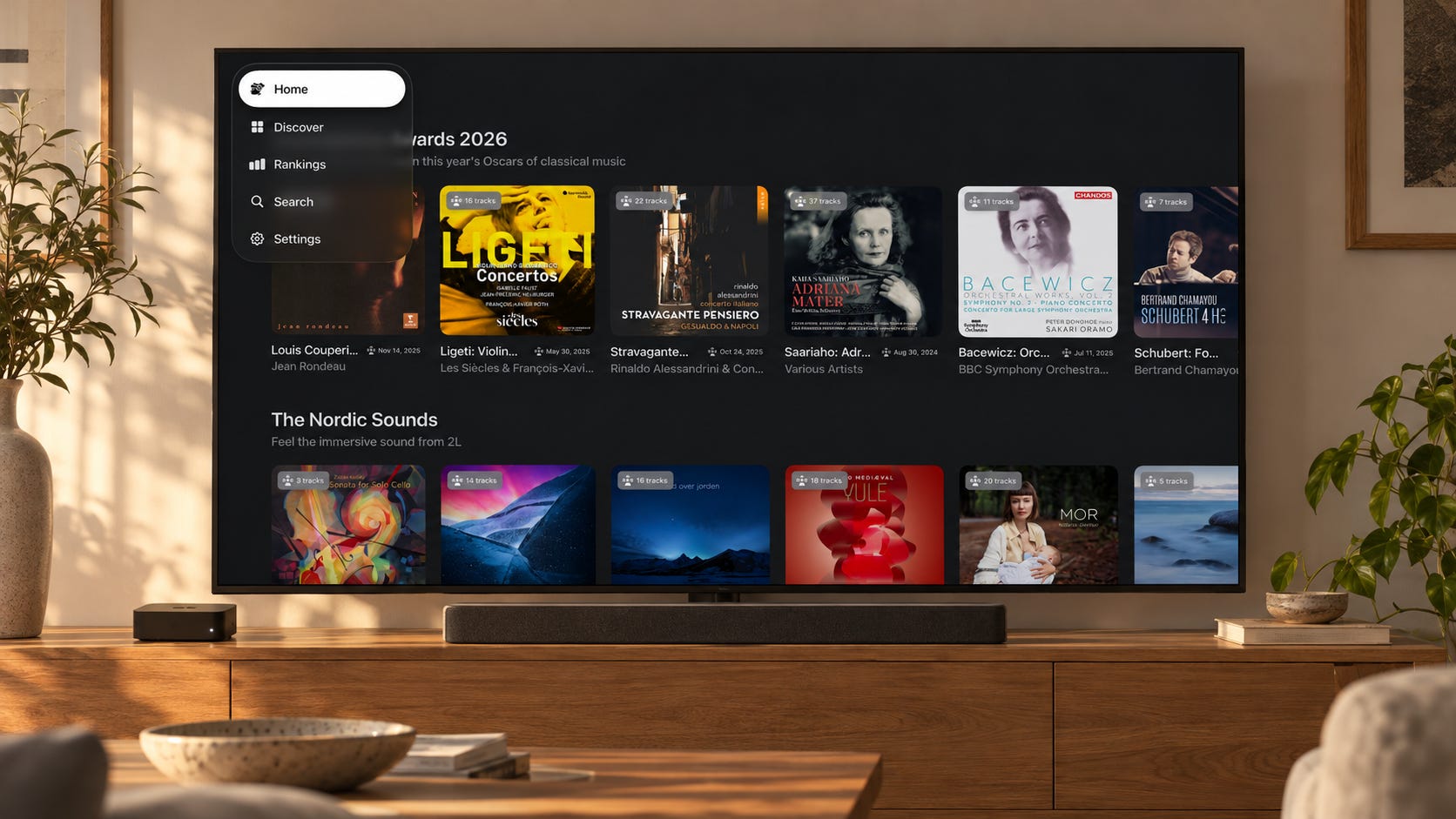
Listening is just as important as discovery. VoxAtmos integrates with Apple Music on iPhone and iPad, allowing subscribers to play the music they find directly in the app. It also runs on Apple TV, bringing Dolby Atmos music to compatible home theater systems, and supports CarPlay for discovering and browsing music on the road.
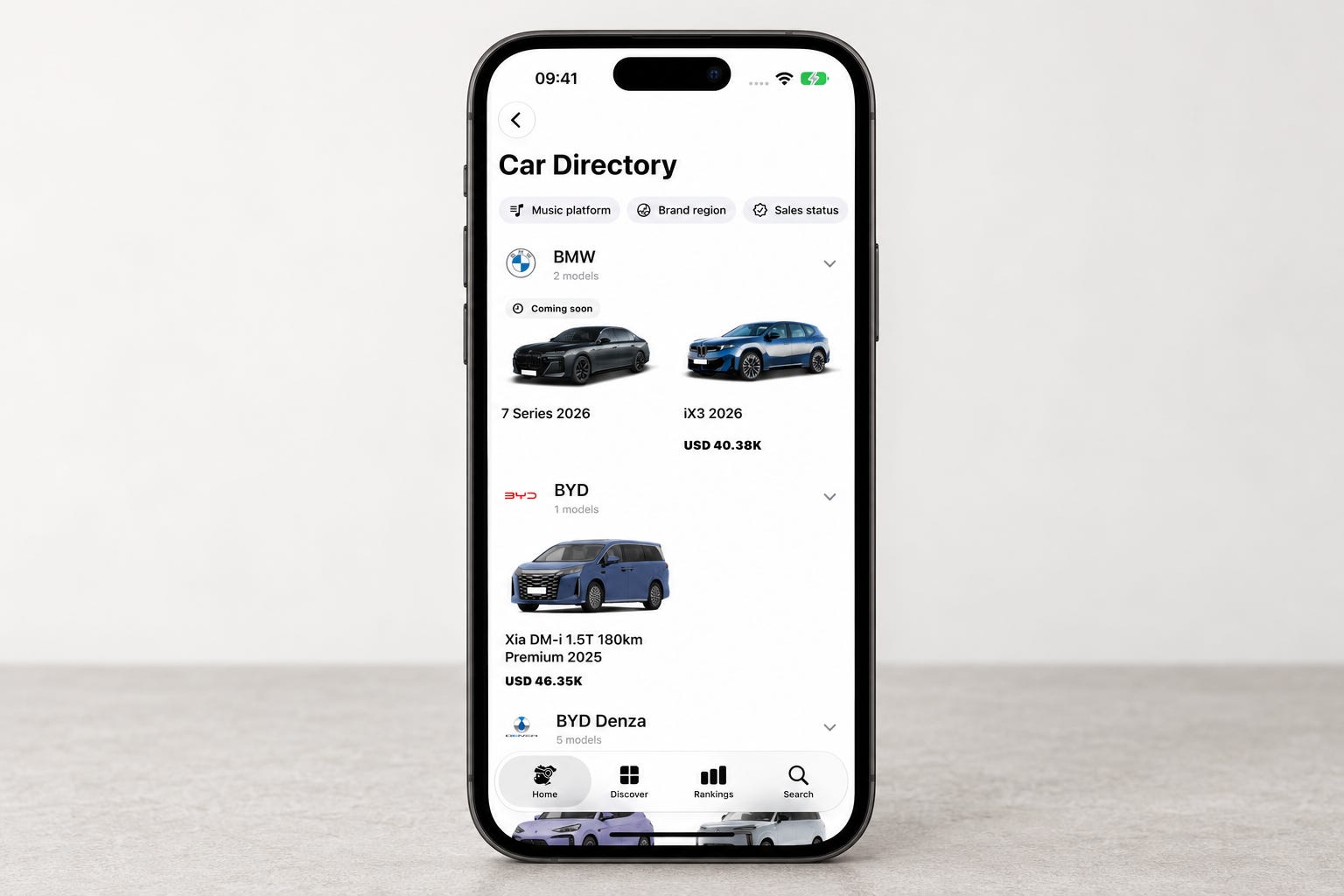
I’ve also started building a database of cars that support Dolby Atmos music, documenting compatible models and their audio systems. It might seem like an unusual feature for a music discovery app, but finding a Dolby Atmos recording is only half the challenge. Knowing which devices can actually play it, and how to get the most out of them, matters just as much.
Ultimately, I want VoxAtmos to connect music discovery with the listening experience, wherever that happens to be.
I’m certainly not the only person trying to make Dolby Atmos music easier to discover. Projects such as Ben Dodson’s Music Library Tracker and Spatial Audio Finder, as well as Adrian Wrona’s Hello Atmos, have been doing valuable work in this area, each with its own approach. It’s encouraging to see others tackling the same challenges from different directions.
I often think of VoxAtmos as something similar to Apple Music Classical. Apple acquired Primephonic in 2021 and launched Apple Music Classical two years later, recognizing that classical music, with its complex relationships between composers, performers, works, and recordings, deserved a more specialized experience than the regular Apple Music app could offer.
I believe immersive music deserves something similar. Like classical music, it has a dedicated audience, but there’s also an opportunity to introduce it to people who might never have considered listening to it. What makes immersive audio different from stereo? Which recordings are worth hearing, and what equipment do you need to enjoy them? How do you find and listen to them? Beyond cataloging releases, I want VoxAtmos to help answer these questions, document the people and creative work behind the music, and make the technology more approachable. These are the things I believe a dedicated app can do better than a general-purpose music platform.
It’s also been encouraging to see how people are putting VoxAtmos to use. A music-industry professional I met in Beijing told me how useful VoxAtmos was in his work, while others have contributed information, shared feedback, and helped improve the database. Some users have continued supporting the project since I introduced paid features, something I never take for granted.
I’m still a long way from realizing that vision, and VoxAtmos remains a one-person project. But I’m optimistic about what lies ahead.
It’s funny to think that when generative AI was taking off in 2023, I was still pretty skeptical about it. Having spent years as a journalist and editor, I wasn’t particularly impressed by AI-generated writing and often made fun of it. I certainly never imagined that just a couple of years later, I’d be using the same technology to build a cross-platform music discovery app, let alone maintain its servers, fix its bugs, and answer questions from users around the world. AI has fundamentally changed what I believe I can accomplish on my own.
There’s still plenty I want to do with VoxAtmos, especially as I begin reaching out to the English-speaking community for the first time. I hope to build stronger connections with the international music community, learn how listeners in different countries use the app, and help more artists bring their music to a wider audience.
That’s partly why I’ve started this blog. I want a place to share not just product updates, but also discoveries about immersive music, observations from the industry, and my own experiences developing and promoting an independent app. There will probably be a few frustrations along the way, too.
VoxAtmos began because I wanted an easier way to find music I loved. Despite everything that’s changed, that’s still the simplest explanation for why I keep working on it.
Try VoxAtmos on iPhone, iPad, Apple TV and CarPlay: https://apps.apple.com/us/app/voxatmos/id6754264865